
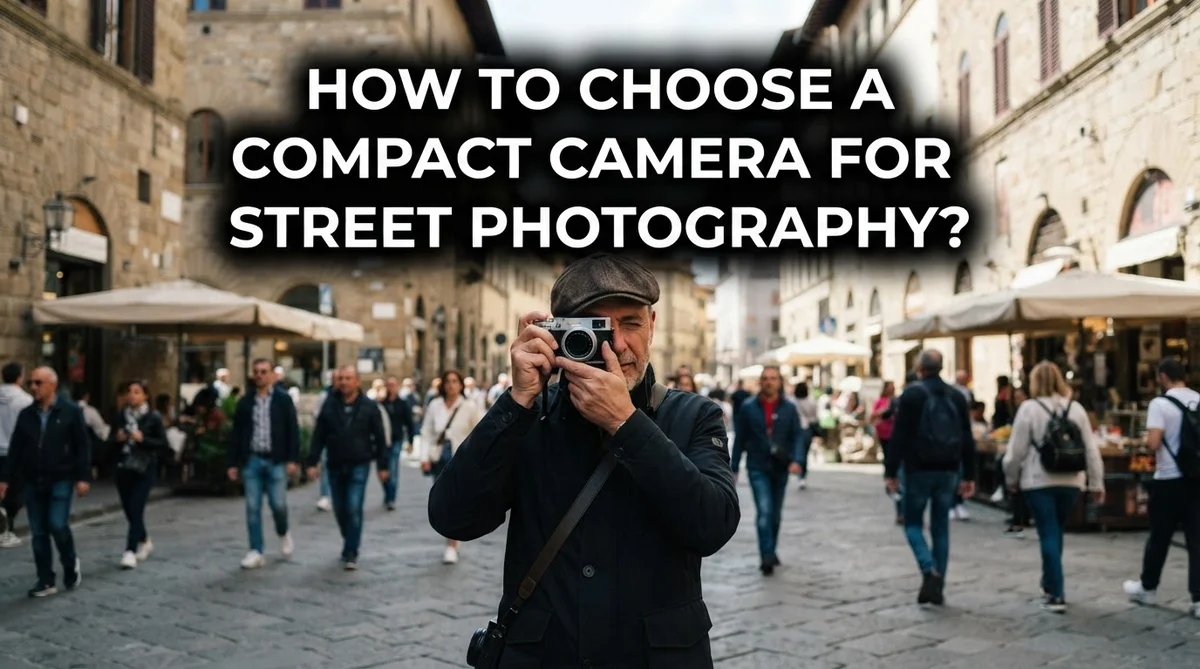
How to Choose a Compact Camera for Street Photography?
Street photography moves fast. You need a camera that keeps up without slowing you down.
The right compact camera can make or break your street game. It should feel like an extension of your hand, not a barrier between you and the moment.
Big, bulky gear draws attention. It makes people pose or freeze up. A small, discreet body helps you blend into the scene and capture real, unposed moments.
This guide walks you through everything you need to know. We will cover why size and weight matter so much for street shooters. You will learn how prime lenses can sharpen your results and simplify your workflow.
We will also break down focal length choices, shutter speed basics, and why a black, low profile finish helps you stay invisible.
By the end, you will know exactly what to look for. You will avoid common mistakes that trip up new street photographers. Whether you shoot busy city corners or quiet alley scenes, the right compact camera becomes your best creative partner.
Let’s find the perfect match for your street photography style.
In a Nutshell
Here is your quick summary for choosing the right gear:
-
Pick a small, discreet body. A compact size helps you blend into crowds. It also makes candid shots easier to capture.
-
Choose prime lenses over zooms. Prime lenses are lighter and faster. They also push you to compose shots with your feet, not just your fingers.
-
Match the camera to your hand size. A camera that feels comfortable will not slow you down. Smaller hands work best with compact bodies.
-
Go for a 24mm or wider focal length. This range captures more of the scene around your subject. It is a favorite among many street shooters.
-
Keep shutter speed fast. Aim for a speed quicker than 1/your focal length. A baseline of 1/500s often works well for street action.
-
Skip flashy branding and loud straps. A quiet, black finish keeps eyes off your gear. This lets you focus on the moment, not the attention.
-
Weather resistance is a nice bonus. It is not essential but adds durability for outdoor shooting in changing conditions.
Why Camera Choice Matters for Street Photography
Camera choice directly impacts your ability to capture authentic moments on the street. Your gear becomes an extension of your eye, so picking the right tool matters more than most photographers realize.
A compact camera keeps you invisible. When your equipment is small and quiet, people around you stay relaxed and natural. They do not tense up or change their behavior. This means you capture genuine expressions and real interactions instead of posed reactions.
The right camera also affects your shooting speed. A lightweight body lets you move quickly through crowds and respond to fleeting moments. You can raise the camera, focus, and shoot before the scene changes. Heavy gear slows you down and creates fatigue, which means you miss shots.
Comfort drives consistency. When your camera feels good in your hands, you shoot more. You experiment more. You develop better instincts for composition. An uncomfortable camera gets left at home, no matter how good its specs are.
Discretion plays a huge role in street work. A black camera with minimal branding attracts far less attention than shiny, branded gear. People notice flashy equipment. They become self conscious. Your images suffer because subjects lose their natural behavior.
The right focal length also depends on camera choice. Compact bodies pair well with prime lenses, which are smaller and lighter than zoom lenses. This combination keeps your overall package unobtrusive while giving you the reach you need.
Weather resistance adds practical value. Street photography happens in all conditions. Rain, dust, and temperature changes are part of the job. A camera built to handle these elements lasts longer and performs reliably when conditions get tough.
Your camera choice determines how you approach the street. It shapes your workflow, your comfort level, and ultimately, the images you create. Selecting wisely means you spend less time thinking about gear and more time focusing on light, composition, and human moments.
Key Features to Look For in a Street Photography Camera
When you’re hunting for a compact camera, sensor size matters more than you might think. A full frame sensor captures more light and delivers cleaner images in dim street conditions. However, APS-C sensors offer a smart balance between image quality and body size, making them ideal for street work where portability counts.
Look for a camera body that fits your hands comfortably. If you have smaller hands, an undersized body prevents fatigue during long shooting sessions. Larger hands need adequate grip space to maintain control. Test the weight too. Anything over two pounds becomes tiresome when you’re walking for hours.
The lens you pair with your camera shapes your entire approach. Prime lenses (fixed focal length) outperform zooms for street photography because they’re lighter, faster at gathering light, and encourage you to move closer to your subject. A 24mm or 28mm lens captures environmental context while keeping your presence low key.
Shutter speed capability is critical. Your camera should handle at least 1/500th of a second to freeze motion in bright daylight without needing neutral density filters. Fast autofocus performance ensures you don’t miss fleeting moments. Look for cameras with continuous autofocus that tracks moving subjects smoothly.
Build quality affects durability on the streets. Weather sealing protects your gear from rain, dust, and humidity. While not absolutely necessary, it adds years to your camera’s lifespan if you shoot regularly outdoors.
The viewfinder type matters too. Electronic viewfinders let you see exposure and focus in real time, which helps you nail shots faster. Optical viewfinders feel more natural to some photographers but offer less information.
Finally, consider the button layout and menu system. Intuitive controls let you adjust settings quickly without taking your eye off the action. A camera that feels natural to operate becomes an extension of your vision rather than a distraction.
Choosing the Right Body Size and Handling
When you’re selecting a compact camera for street photography, the body size and how it feels in your hands matter more than specs alone. A camera that sits comfortably in your grip means you’ll shoot faster and stay focused on capturing moments instead of fighting with your gear.
Start by holding different camera bodies before you buy. Your hand size determines what works best. If you have smaller hands, a compact body prevents fatigue during long shooting sessions. Larger hands need enough grip space so your fingers don’t cramp. The goal is a camera that becomes an extension of your arm, not a burden.
Weight plays a critical role in street work. A lighter camera means you’ll carry it longer and move faster through crowds. Heavy gear slows you down and makes you more noticeable to subjects. Discretion comes from both size and weight combined.
Pay attention to button placement and dial positioning. You want controls within easy reach so you can adjust settings without looking down. A confusing menu system or awkwardly placed buttons will slow your shooting rhythm. Test the camera’s ergonomics by simulating real shooting positions.
Consider the viewfinder placement and eye relief. A viewfinder that sits too far back or too close can cause discomfort during extended shooting. Your eye should find it naturally without adjusting your head position repeatedly.
Check how the camera balances with your chosen lens. A front heavy setup creates fatigue and reduces stability. The camera and lens should feel like one unified tool, not two separate components fighting each other.
The best body size is the one you’ll actually use. A camera that feels awkward in your hands will stay in your bag. Comfort directly translates to more shots, better timing, and stronger images. Spend time handling different options to find your perfect fit.
Selecting the Ideal Focal Length and Lens Type
Focal length is the foundation of your street photography style. It determines how close you need to stand to your subject and how much of the scene you capture. Wider lenses starting at 24mm let you include more background context and environmental details. They work well when you want to show where your subject exists in the world.
A 35mm focal length sits between wide and normal. This range offers a natural perspective that matches how your eye sees the street. Many street photographers prefer 35mm because it feels balanced. You get enough context without distorting faces or requiring you to stand too far away.
The 50mm focal length gives you a tighter view. You’ll need to move closer to your subjects. This focal length feels more intimate and personal. It works great when you want to isolate your subject from busy backgrounds.
Prime lenses outperform zoom lenses for street work. Prime lenses are smaller, lighter, and faster. They let more light reach your sensor, which matters in shadowy urban environments. Zoom lenses add bulk and weight, which reduces your ability to move quickly and stay discreet.
Avoid extremely wide lenses like 16mm or 18mm for street photography. These ultra wide angles distort faces and require you to get uncomfortably close to strangers. This breaks the invisible photographer approach that makes street work effective.
Don’t use shallow depth of field as a crutch. Street photography relies on sharp detail across the entire frame. You want viewers to explore the whole image, not just focus on one blurry subject. Keep your aperture around f5.6 to f8 to maintain sharpness throughout your frame.
Test different focal lengths before committing. Borrow cameras or rent them for a day. Shoot the same scene with 24mm, 35mm, and 50mm lenses. You’ll quickly discover which focal length matches your vision and shooting style.
Camera Settings for Candid, Blur-Free Shots
Getting sharp, candid shots on the street requires you to master a few critical camera settings. The foundation starts with your shutter speed, which must be fast enough to freeze motion without blur.
A baseline of 1/500th of a second works well for most street situations. This speed ensures that camera shake and subject movement won’t ruin your images. If your subject moves quickly or light is bright, push your shutter speed even faster to 1/1000th or beyond.
Aperture plays a supporting role in your setup. Avoid opening your aperture too wide, which creates shallow depth of field and makes focusing difficult in candid moments. Instead, shoot at f/5.6 to f/8, which keeps more of your scene sharp and gives you forgiveness when you can’t nail focus perfectly on a moving subject.
Your ISO setting bridges the gap between shutter speed and aperture. In bright daylight, keep ISO low around 100 to 400. When clouds roll in or you’re shooting indoors, bump ISO up to 800 or 1600 to maintain that fast shutter speed without stopping down your aperture too much.
Focus mode matters significantly for street work. Use continuous autofocus rather than single autofocus, allowing your camera to track subjects as they move. Some cameras offer face detection or eye detection, which speeds up focusing on people in crowds.
Enable auto ISO if your camera has it. This feature automatically adjusts sensitivity as light changes, so you stay focused on composition rather than fiddling with settings. Set a maximum ISO limit to prevent excessive noise in your images.
Finally, shoot in aperture priority mode. This lets you control depth of field while your camera handles shutter speed automatically. You maintain creative control without constantly adjusting multiple settings during fast paced street moments.
Design and Discretion: Blending Into the Environment
A discreet camera helps you blend into the street environment. Your subjects stay relaxed when they don’t notice you’re photographing them. This is where design and color choices matter most.
Black camera bodies are your best friend. They attract far less attention than silver or chrome finishes. A matte black body disappears into urban backgrounds better than shiny alternatives. Avoid cameras with large, reflective logos or branding. These draw eyes to your gear and announce your presence immediately.
Size directly impacts discretion. A smaller body feels less intrusive to people around you. Compact mirrorless cameras work better than large DSLRs for street work. Your camera should fit comfortably in one hand. If it requires two hands to hold steady, it’s too large for street photography.
Lens choice affects how you appear to others. A small prime lens looks less threatening than a large zoom. People react differently to compact lenses versus telephoto glass. The smaller your total package, the less you stand out.
Consider your camera strap carefully. Bright straps with visible branding draw attention. A simple, dark strap keeps attention off your gear. Some photographers prefer no strap at all, holding the camera directly.
Minimal button noise matters too. Loud shutter sounds and mechanical clicks announce each shot. Quieter cameras let you work without drawing attention. Electronic shutters produce less sound than mechanical ones.
Weather resistance adds practical value without sacrificing discretion. A camera that withstands rain and dust keeps working longer. Durable bodies handle street conditions better than delicate gear.
Your camera should feel like an extension of your body, not a burden. When your gear disappears into the background, you can focus on composition and timing. Discretion isn’t about hiding. It’s about letting people forget you’re there so you capture genuine moments.
Common Mistakes to Avoid When Choosing Your Setup
Many photographers make the same errors when selecting street photography gear. Understanding these pitfalls helps you make smarter choices.
Choosing gear that’s too heavy is the biggest mistake. A bulky camera and lens combination will exhaust you during long shooting sessions. You’ll leave it at home more often than you use it. Street photography demands gear you can carry comfortably for hours. Your setup should feel natural, not like a burden on your neck and shoulders.
Oversized equipment also works against you on the street. Large cameras draw attention and make subjects uncomfortable. People notice when a big lens points at them. Your goal is to observe and capture moments without disrupting the scene. Discretion matters more than impressive specs.
Another common error involves ignoring shutter speed fundamentals. New photographers often shoot too slowly and end up with blurry images. A baseline of 1/500th of a second prevents motion blur in most street situations. If you’re using a 50mm lens, go faster than 1/50th of a second. Match your shutter speed to your focal length for sharp results.
Don’t fall into the trap of using extremely shallow depth of field. Some photographers rely on f/1.4 apertures to make images look professional. Street photography works better with more depth of field. You’ll have more flexibility focusing on moving subjects. An aperture around f/5.6 to f/8 keeps more of the scene sharp.
Loud camera straps and visible branding create unnecessary distractions. Noisy straps announce your presence before you even raise the camera. Minimize visible logos and text on your gear. A simple, quiet strap lets you work discreetly.
Finally, avoid buying gear without testing it first. Hold different bodies. Feel how they balance with actual lenses. What feels right in a store might feel wrong after an hour on the street. Your hands know what works better than any review.
Final Thoughts
Choosing a compact camera for street photography comes down to fit. Your camera should match your hand size and your shooting style. A body that feels natural lets you react fast and stay comfortable during long walks.
Small, discreet cameras help you blend into any scene. When people barely notice your gear, they act naturally. This gives you authentic, candid moments instead of stiff, posed shots.
Prime lenses remain your best choice. They keep your setup light and fast. A single focal length also trains your eye to see compositions quickly, without relying on zoom.
Shutter speed control matters just as much as camera choice. Keep your speed fast enough to freeze motion, especially in busy streets. This habit prevents blurry, unusable frames.
Don’t get distracted by flashy features or heavy builds. Simplicity often wins on the street. A minimal, quiet setup lets you focus on people and moments, not gear.
Weather resistance is a nice bonus, but it should never outweigh portability. You want a camera that survives light rain, not one that weighs you down all day.
Think about how your camera looks too. A plain black body with no visible branding keeps attention off you. This small detail can make a big difference in how subjects react.
At the end of the day, the best compact camera for street photography is the one you barely notice you’re carrying. It should feel like a natural part of your routine, not a burden.
Test a few models before deciding. Hold them, walk with them, and imagine using them for hours. Your comfort and confidence with the camera matter more than any spec sheet.
Choose wisely, and your camera will become an invisible partner in capturing real, everyday life around you.
Frequently Asked Questions
What focal length works best for street photography?
Wider focal lengths like 24mm and 35mm are ideal for street work. These lenses help you capture context and environment around your subject. Wider angles let you get closer to people without being obvious about it. They also give you more depth of field, which means less focus hunting during fast moments.
50mm lenses can work too, but they require more distance between you and your subject. This makes them less discreet on busy streets.
How fast should my shutter speed be?
You need a baseline of around 1/500 second for street photography. This speed prevents motion blur when you or your subject moves. The general rule is to shoot faster than your focal length as a fraction. So a 35mm lens needs at least 1/35 second, but street scenes move too fast for that.
Aim higher when possible. Faster shutter speeds give you more freedom to capture decisive moments without blur.
Does weather resistance matter for a compact camera?
Weather resistance is helpful but not essential. It adds durability if you shoot in rain or dusty environments. Don’t sacrifice portability or size just to get weather sealing though. A lighter, more compact camera you actually carry beats a weather sealed tank you leave at home.
Check your local climate and shooting habits. If you shoot mostly indoors or in dry conditions, weather resistance becomes less critical.
Should I use a zoom lens or stick with primes?
Prime lenses are superior for street photography. They’re smaller, lighter, and faster than zoom lenses. Primes force you to move and engage with your environment more actively. This movement helps you find better angles and stronger compositions.
Zooms add bulk and weight. They also encourage lazy framing instead of intentional positioning.

Dillip is the founder and chief reviewer behind TheFormatFix.com, where he simplifies tech for everyday users through honest reviews, in-depth comparisons, and practical buying guides. With a passion for gadgets and a knack for breaking down complex specs into easy decisions, he helps readers pick the right tech without the guesswork.


